Obstetric triage aims at rapidly assessing and prioritizing pregnant individuals when they present for care, based on the urgency or acuity of their medical needs. It is a critical component of maternal health care.
In resource constrained environments where health care resources may be limited, obstetric triage plays a crucial role in optimizing the allocation of available resources ensuring that the most urgent cases receive timely care. By efficiently identifying high risk pregnancies or those women requiring immediate care, obstetric triage helps to reduce maternal and neonatal morbidity and mortality.
In many areas of the world, Labour and Delivery Units serve as first-contact emergency units for women with acute obstetric or postpartum complaints. In other locations, all acute or unscheduled visits to the hospital come through the general emergency unit including obstetric or postpartum complaints. It is therefore important to have a harmonised approach to obstetric triage across all locations in the hospital where obstetric and postpartum emergencies may present.
Pregnant patients are unique in that they are two patients rather than one. In addition, the physiologic changes of pregnancy affect every organ system. When these individuals arrive in Labour and Delivery or in the emergency unit, they should be met by a nurse or midwife, experienced in triage, who will then determine what care is needed and how quickly additional help is required. This does not require a complex exam and is based on the chief complaint or presenting syndrome (altered mental status or shock, for example).
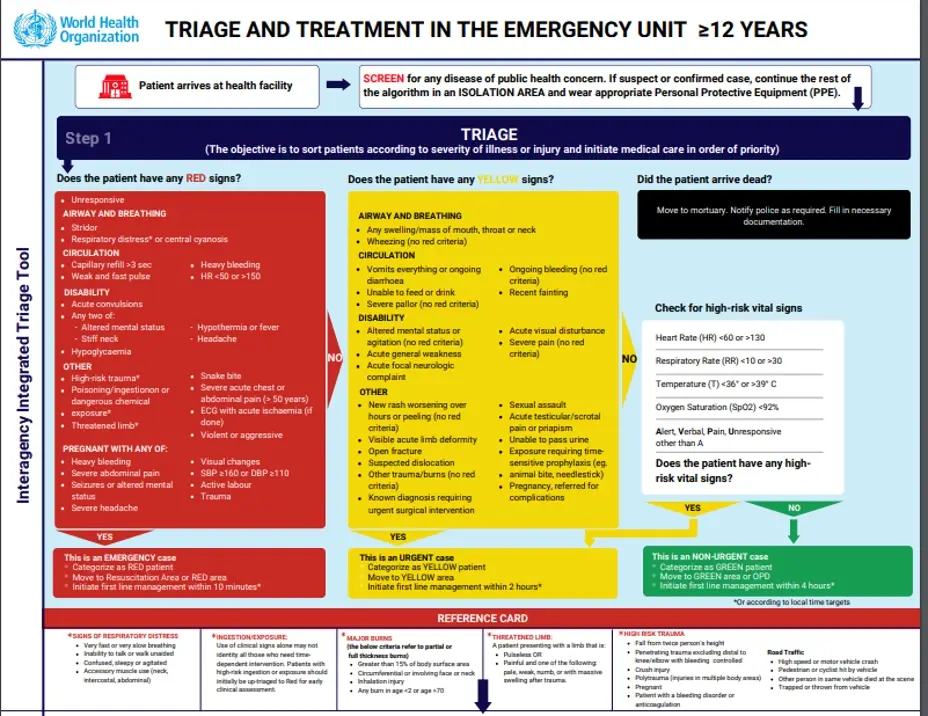
This triage tool was developed by the WHO, in collaboration with ICRC and MSF, to provide a set of protocols for routine facility-based triage. It allows for the immediate triage of a patient into red, yellow or green, depending on acuity. A second version exists for children aged up to 12 years (link to IITT <12). This tool flags all infants less than 8 days of age as RED requiring immediate triage. The Essential Newborn Care program, developed by the WHO provides an immediate action plan from birth to 60 minutes of age. (see neonatal triage section)
The IITT is used to rapidly assign a priority – red (immediate), yellow (urgent) or green (delayed) – based on a rapid assessment at the time of presentation. Once a colour has been assigned, triage is complete. For obstetrical patients the IITT tool should be used but in conjunction with obstetrical modifiers that may adjust the priority assigned by the IITT. For best outcomes for patients, triage should be linked closely to intervention and facilities may wish to assign actions to different priority groups.
The first step is to determine if the patient has any RED signs, necessitating immediate attention. (see chart below)