

IMPAC Guide Overview
The aim of Pregnancy, childbirth, postpartum and newborn care guide for essential practice (PCPNC) is to provide evidence-based recommendations to guide health care professionals in the management of women during pregnancy, childbirth and postpartum, and post abortion, and newborns during their first week of life, including management of endemic diseases like malaria, HIV/AIDS, TB and anaemia.
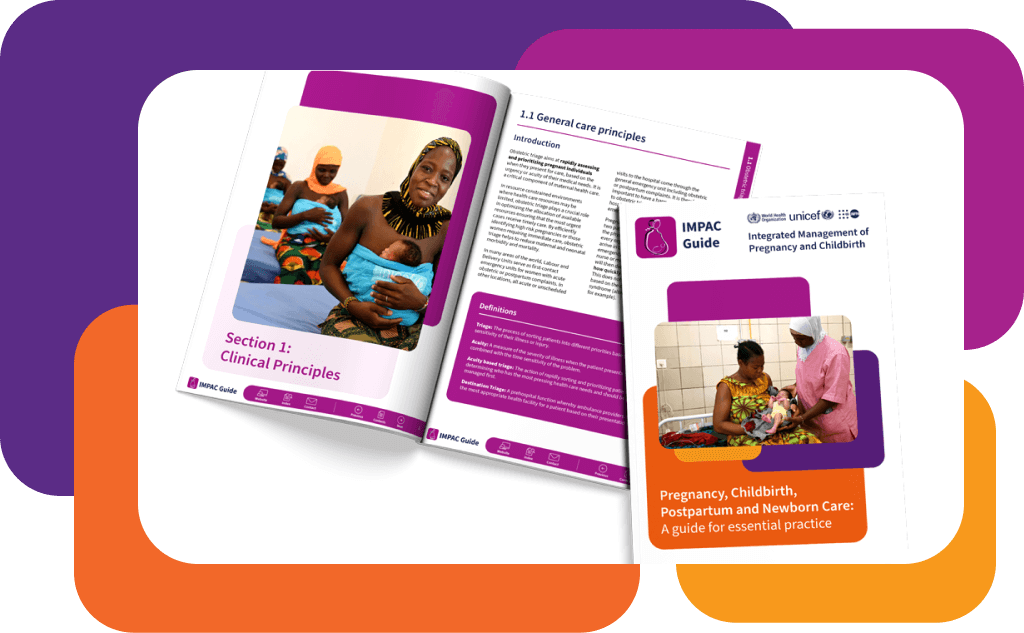
Table of contents
Obstetric triage aims at rapidly assessing and prioritizing pregnant individuals when they present for care, based on the urgency or acuity of their medical needs. It is a critical component of maternal health care.
Obstetric triage aims at rapidly assessing and prioritizing pregnant individuals when they present for care, based on the urgency or acuity of their medical needs. It is a critical component of maternal health care.
1.1.1 Basic Principles When Providing Care
1.1.2 Infection Prevention and Control
1.1.4 Basic Principles for Procedures
1.1.5 Clinical Use of Blood, Blood Products, and Replacement Fluids
1.1.6 Replacement Fluids: Simple Substitutes for Transfusion
Obstetric triage aims at rapidly assessing and prioritizing pregnant individuals when they present for care, based on the urgency or acuity of their medical needs. It is a critical component of maternal health care.
Obstetric triage aims at rapidly assessing and prioritizing pregnant individuals when they present for care, based on the urgency or acuity of their medical needs. It is a critical component of maternal health care.
Obstetric triage aims at rapidly assessing and prioritizing pregnant individuals when they present for care, based on the urgency or acuity of their medical needs. It is a critical component of maternal health care.
Obstetric triage aims at rapidly assessing and prioritizing pregnant individuals when they present for care, based on the urgency or acuity of their medical needs. It is a critical component of maternal health care.