

Types of Spontaneous abortion
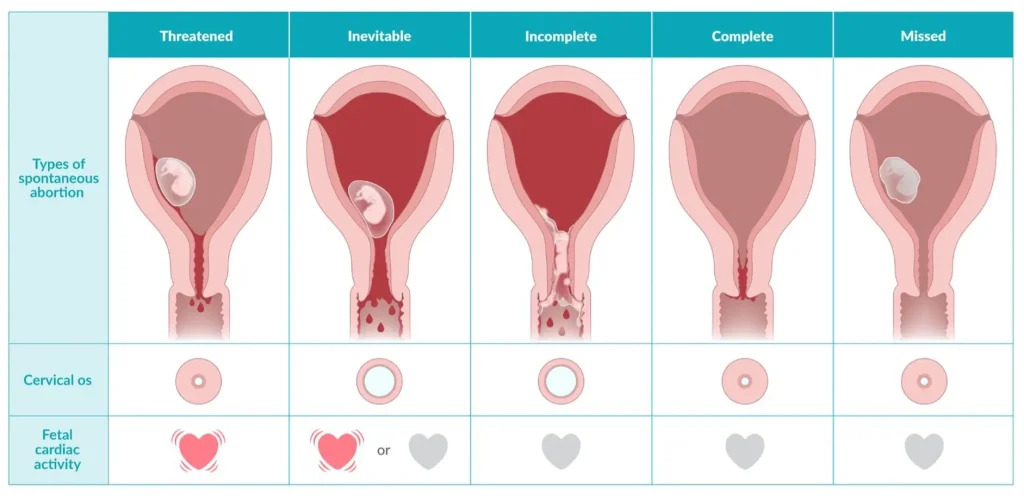
This chart shows the different clinical presentations of spontaneous abortion:
Threatened abortion, Inevitable abortion, Incomplete abortion, Complete abortion and Missed abortion.
Treat risk of infection

Treat possible infection after assessment of risk factors.
If a baby has one or more risk factors for infection and looks unwell on exam or has a Danger Sign, the baby will need advanced care. Refer and transport appropriately for advanced care.
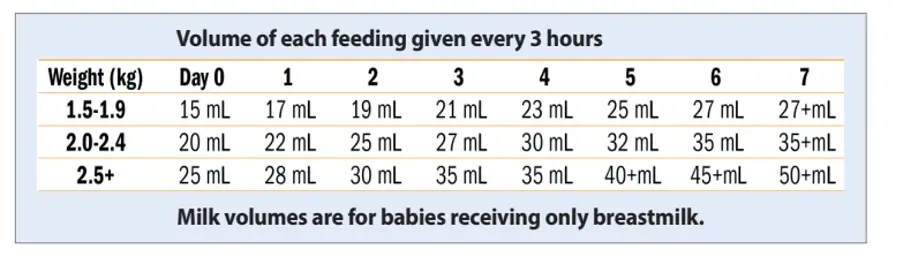
Volume feeding chart
This triage tool was developed by the WHO, in collaboration with the ICRC and MSF,International Committee of the Red Cross (ICRC) and Medecins Sans Frontieres (MSF) to provide a set of protocols for routine facility-based triage. It allows for the immediate triage of a patient into red, yellow or green, depending on acuity…
2.4 Essential newborn care including immediate postnatal care
Antenatal care ensures a positive pregnancy experience by providing essential clinical care, emotional support, and health monitoring. It includes risk assessment, screenings, nutritional guidance, birth planning, and preventive treatments to optimize maternal and newborn health, following WHO’s eight-contact model for pregnancy care.
2.3 Postpartum care
Antenatal care ensures a positive pregnancy experience by providing essential clinical care, emotional support, and health monitoring. It includes risk assessment, screenings, nutritional guidance, birth planning, and preventive treatments to optimize maternal and newborn health, following WHO’s eight-contact model for pregnancy care.
2.2 Normal labour and childbirth
Antenatal care ensures a positive pregnancy experience by providing essential clinical care, emotional support, and health monitoring. It includes risk assessment, screenings, nutritional guidance, birth planning, and preventive treatments to optimize maternal and newborn health, following WHO’s eight-contact model for pregnancy care.
2.1 Antenatal care
Antenatal care ensures a positive pregnancy experience by providing essential clinical care, emotional support, and health monitoring. It includes risk assessment, screenings, nutritional guidance, birth planning, and preventive treatments to optimize maternal and newborn health, following WHO’s eight-contact model for pregnancy care.